Resol Poshtel Tokyo Asakusa Review: Rooms, Location & Is It Worth It?
Home / Capsule hotels in Tokyo / Resol Poshtel Tokyo Asakusa
What Is a ‘Poshtel’? Resol Poshtel’s Concept Explained
The word ‘poshtel’ is exactly what it sounds like: ‘posh’ plus ‘hostel.’ But that portmanteau does a lot of heavy lifting, and it’s worth understanding what it actually means in practice before you book.
A standard hostel trades comfort for price. You get a bunk bed, a shared bathroom, and — if you’re lucky — a locker. A capsule hotel gives you a private sleeping pod, but the pods are often cramped, the common areas are minimal, and the experience feels transactional. A poshtel sits in a third category: boutique design, hotel-grade service standards, and shared sleeping arrangements — but with far more thought put into privacy, aesthetics, and amenities than you’d expect at the price point.
Resol Hotels is a well-established Japanese hotel group operating 3–4 star properties across the country. Hotel Resol Ikebukuro, for instance, is a conventional 3-star hotel with private en-suite rooms starting from approximately ¥12,000/night, and it scores 9.3/10 on comparable review platforms. The Asakusa poshtel applies the same brand service standards — trained multilingual staff, consistent housekeeping schedules, a designed physical environment — but in a shared-sleeping format at roughly half the price. That makes it the group’s entry point for budget-conscious travellers who still expect quality. Where the Ikebukuro property gives you a private room with its own bathroom, the Asakusa poshtel gives you a thoughtfully designed pod in a well-maintained dorm — a meaningful trade-off in space that delivers a meaningful saving in cost.
Here’s the practical difference. At Resol Poshtel Tokyo Asakusa, every bunk has its own blackout curtain, reading light, and individual power socket. The bathrooms are gender-split and cleaned multiple times daily. There’s a proper lounge space with free coffee. The staff speak English. None of this is standard at a $25-a-night hostel.
What you’re paying for — the $11–17 premium over a basic hostel — is the removal of the compromises that make budget travellers hesitate about hostel stays in the first place. For many travellers, that trade-off is obviously worth it. For the most budget-conscious, it’s a genuine consideration.
Asakusa
Resol Poshtel Tokyo Asakusa
Address: S2 Chome-25-1 Nishiasakusa, Taito City, Tokyo 111-0035, Japan
A stylish poshtel combining boutique hotel comfort with the affordability and social atmosphere of a hostel.
Room Types: Pods, Dorms, and Private Rooms at Resol Poshtel Tokyo Asakusa
The sleeping arrangements at Resol Poshtel Tokyo Asakusa are where the property earns its reputation — and where it most clearly separates itself from a standard hostel.
The Pod/Cabin Design
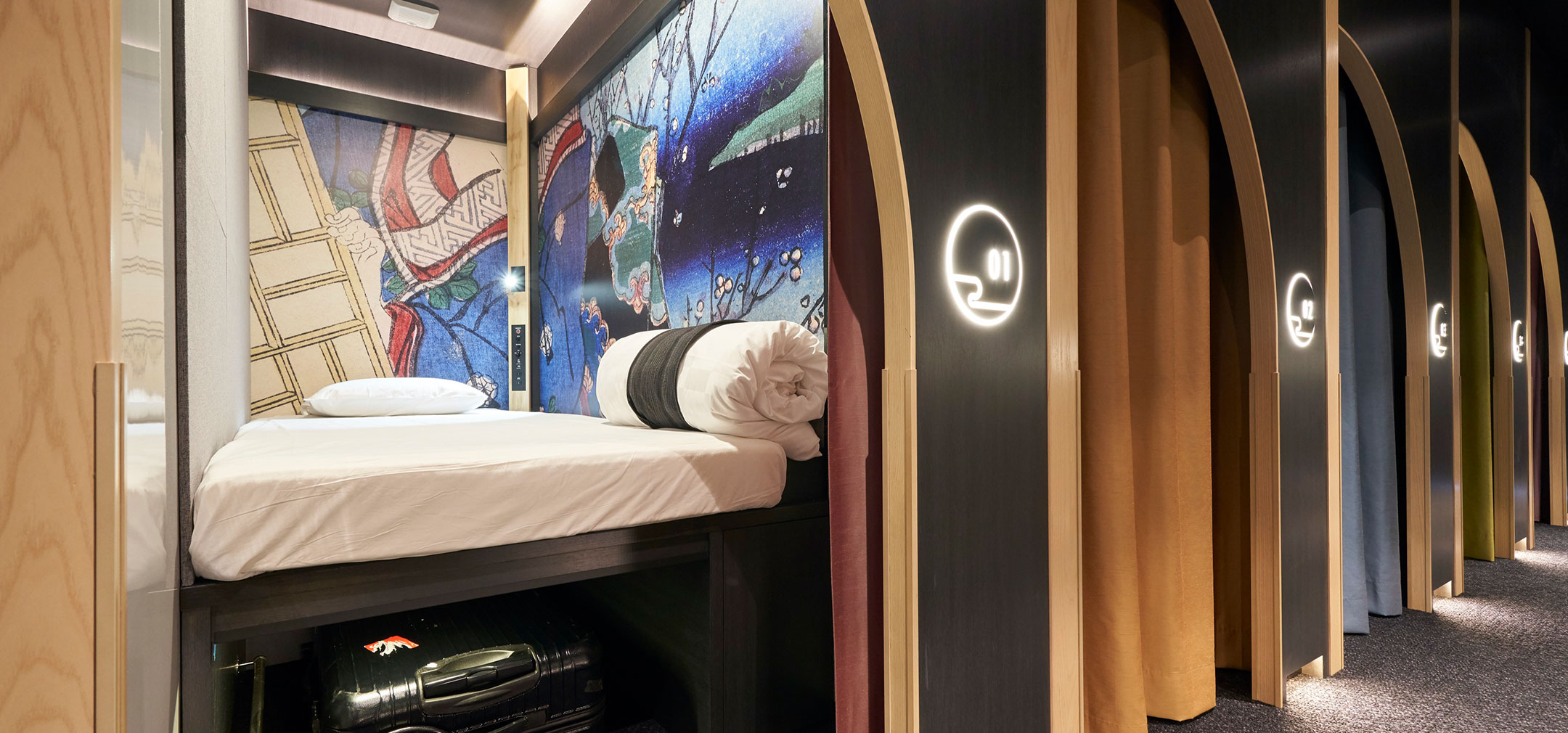
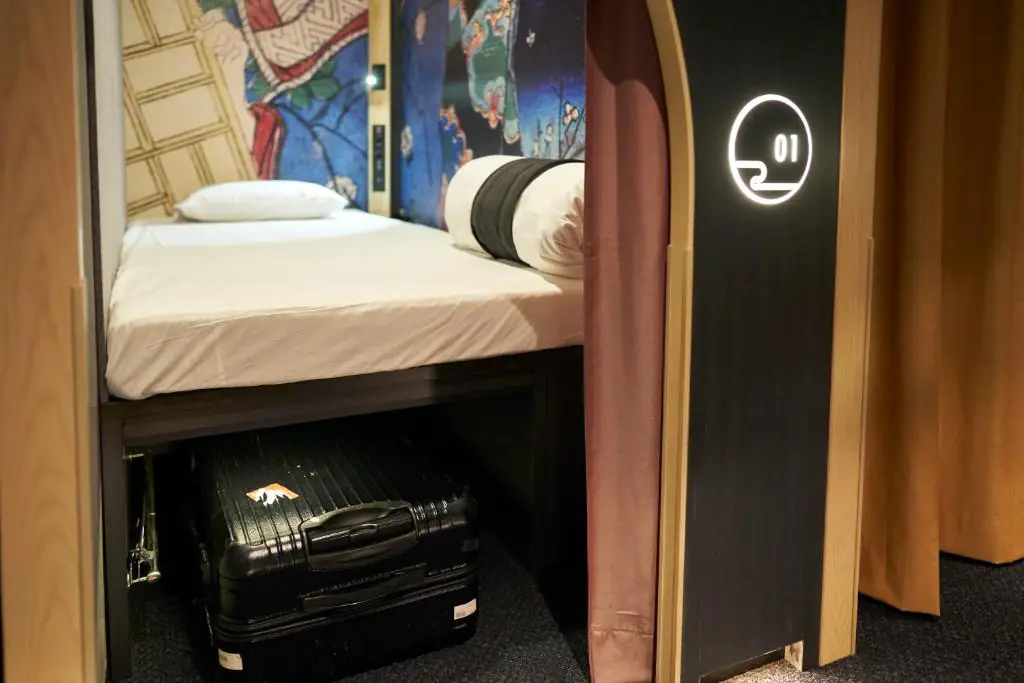
Dorms are configured in 4–6 bed setups, available in male-only, female-only, and mixed cabin options. Each bunk is enclosed — or more accurately, semi-enclosed — by full blackout curtains, creating what functions more like a personal sleeping cabin than a traditional bunk bed. Inside each pod: a reading light on a flexible arm, a power socket (so your phone and laptop are charging while you sleep), and enough space to sit up without cracking your head on the frame above.
The colour palette is calm and deliberate — natural wood tones, grey accents, dark green details. It reads boutique hotel, not student accommodation.
Guests consistently report that the blackout curtains do exactly what they’re supposed to. Even in a 12-bed dorm, one reviewer noted, they woke up naturally without any light disturbance from fellow guests. That’s not an accident — it’s the result of a design that actually thought about the sleep experience rather than just fitting as many beds as possible into a room.
Noise is the other major concern in shared dorms, and it’s addressed in more detail in the cleanliness and noise section below. The short version: guest etiquette in this property is reportedly excellent, and the pod structure creates a meaningful sound buffer that open bunks don’t.
Gender-Specific Experiences
It’s worth noting the gender-specific options here, because they matter — particularly for solo female travellers. Female cabins are separate from mixed and male cabins, and female guests have access to a dedicated cosmetic/vanity room that male guests don’t. This isn’t a token gesture; multiple reviews from solo women specifically highlight the vanity room as a practical convenience that saves time competing for bathroom mirror space.
Mixed cabins are available for couples or travellers who don’t mind co-ed sleeping arrangements. Male cabin reviews tend to emphasise the quietness and efficiency of the setup; female cabin reviews more often mention the additional amenities and the sense of security.
Private Rooms
Private rooms sleep 2–4 guests and start from approximately $71/night, going up to around $109/night depending on room size and season. For a couple travelling together, this is a genuinely competitive price point — you’re getting a private room in central Asakusa for less than most mid-range business hotels charge for a single occupancy.
Shared bathrooms are gender-split and described by guests across hundreds of reviews as consistently spotless. More on that shortly.
Single Cabin
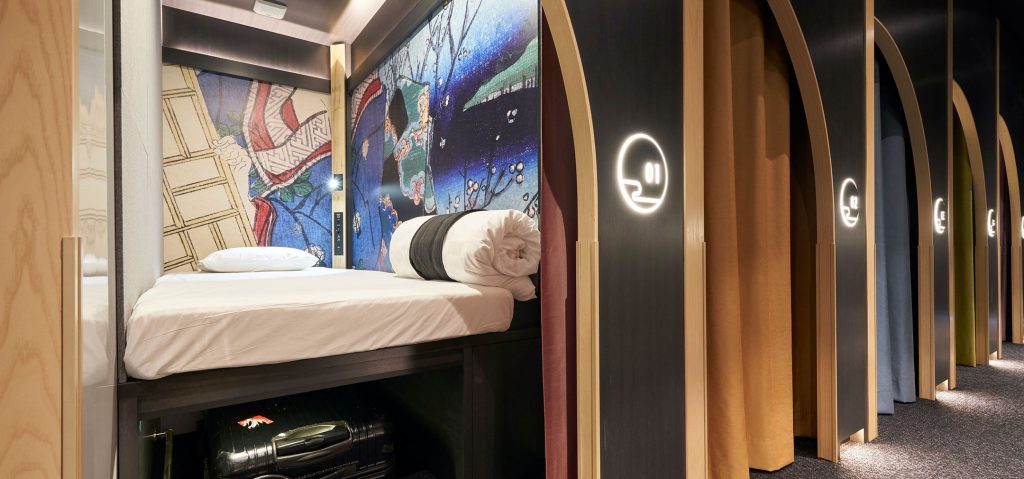
Inspired by traditional Japanese design, the accommodation features a charming teahouse-style entrance and tasteful décor. Guests can stay on male-only, female-only, or mixed floors, allowing for a more personalised and comfortable experience.
Private Pod Blocks
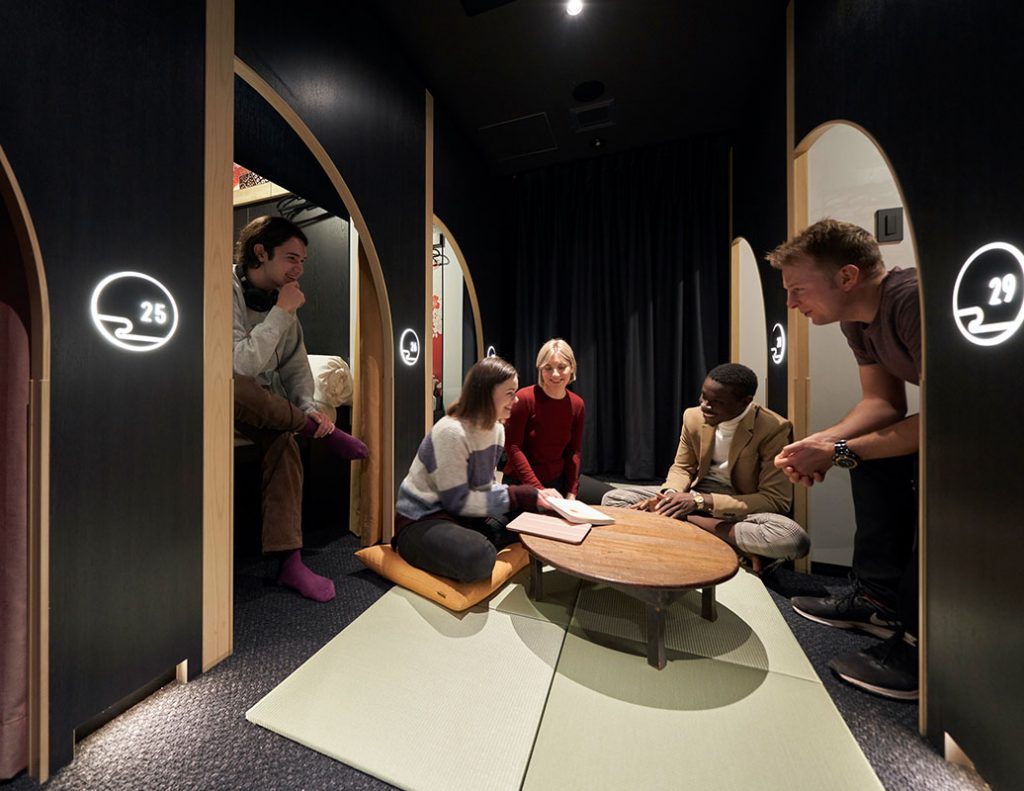
Groups of 5–12 guests can reserve an entire pod block, providing a private and convenient space to stay together. It’s a great option for families, friends, or celebrations while still enjoying the hotel’s unique atmosphere.
Pricing and Value: Is Resol Poshtel Worth the Premium?
Dorm beds start at approximately $40/night. Private rooms start at around $71/night and go up to roughly $109/night for larger configurations. By Tokyo hostel standards, that’s not the cheapest option available — a basic 6-bed dorm at a no-frills Asakusa hostel might run $23–29/night. The gap is real: $11–17 more per night for a dorm bed.
The question is whether that gap is justified. For most travellers researching this property, the answer is yes — and here’s the reasoning behind that.
The premium buys you: a private pod with blackout curtains; free coffee every morning (saving ¥150–200 per day); access to a top-floor lounge with Skytree views; currency exchange at better-than-airport rates; a multilingual concierge; and a cleanliness standard that most budget hotels don’t match. Across a five-night stay, several of those perks have real monetary value.
That said, if your priority is pure cost minimisation and you’re comfortable with a bare-bones bunk in a shared bathroom, a cheaper hostel exists and may serve you better. The value calculation depends on what you’re actually optimising for.
Amenities: What’s Included and What Actually Stands Out at Resol Poshtel
A lot of hostels list ‘free Wi-Fi’ and ‘common area’ as amenities and leave it at that. Resol Poshtel Tokyo Asakusa goes considerably further — and several of the extras are genuinely useful rather than just ticking boxes on a listing page.
Free Coffee and the Living Lobby
Free coffee and drinking water are available in the second-floor living lobby throughout the day. This sounds minor, but in Tokyo — where a coffee from a convenience store costs around ¥150–200 and a café coffee is considerably more — it adds up across a multi-night stay. More practically, it gives you a reason to linger in the common area, which is where you meet other travellers.
Top-Floor Lounge and Tokyo Skytree Views
This is the amenity that guests most often mention unprompted. The top-floor lounge offers direct sightlines to the Tokyo Skytree — and in the evening, when the tower illuminates in blue and white, it’s genuinely impressive. It costs nothing. You don’t need to leave the building. That’s the kind of detail that elevates a stay from functional to memorable.
Wi-Fi
Fast and free, and sufficient for streaming Netflix, which is about as practical a benchmark as you can use for travel Wi-Fi.
Laundry
On-site laundry facilities are available — essential for longer trips or travellers packing light.
Currency Exchange
This one is easy to overlook and worth flagging. The property offers currency exchange at rates described by guests as better than the airport. For UK travellers converting GBP to JPY, that’s a meaningful practical advantage — airport exchange rates in Japan (and everywhere) tend to be poor. Getting a better rate without leaving your accommodation is a genuine convenience.
Concierge and Taxi Booking
English-fluent staff can arrange taxi bookings and assist with sightseeing planning. For first-time Japan visitors navigating a language barrier, this is more useful than it might sound. Knowing there’s someone at the front desk who can help you figure out a route or book a car for an early flight removes a significant source of travel anxiety.
Cosmetic Room
A dedicated vanity/cosmetic room for female guests. Separate from the main bathrooms, it gives women a dedicated space for hair and makeup without competing for mirror time. Thoughtful and practical.
Luggage Storage and Delivery
Luggage storage is available — useful for early arrivals or late departures. A luggage delivery service is also mentioned by multiple guests as a key convenience, allowing you to send bags ahead to your next accommodation and explore Tokyo unencumbered.
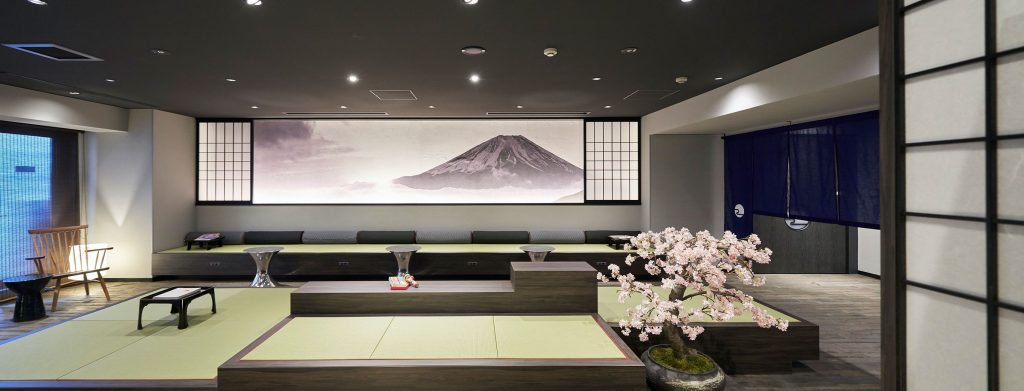
Living Lobby
The lobby provides a calm and inviting space to relax, socialise, or plan your next day in Tokyo. With its cosy atmosphere and subtle Asakusa-inspired design, it feels less like a hotel lobby and more like a comfortable local gathering place.
Food and Dining Nearby
Asakusa is one of Tokyo’s best neighbourhoods for eating on a budget — and it starts immediately outside the door. Nakamise Shopping Street, a 2-minute walk away, is lined with street food stalls selling ningyo-yaki (fish-shaped sponge cakes), melonpan, and freshly grilled skewers. For something more substantial, ramen and soba shops are scattered throughout the backstreets within a 5–10 minute walk. Hoppy Street (Hoppy-dori), a short stroll from the property, is a lively strip of izakayas — traditional Japanese pub-restaurants — where you can eat and drink well for very little. It’s a Tokyo food experience that doesn’t require a reservation or a big budget.
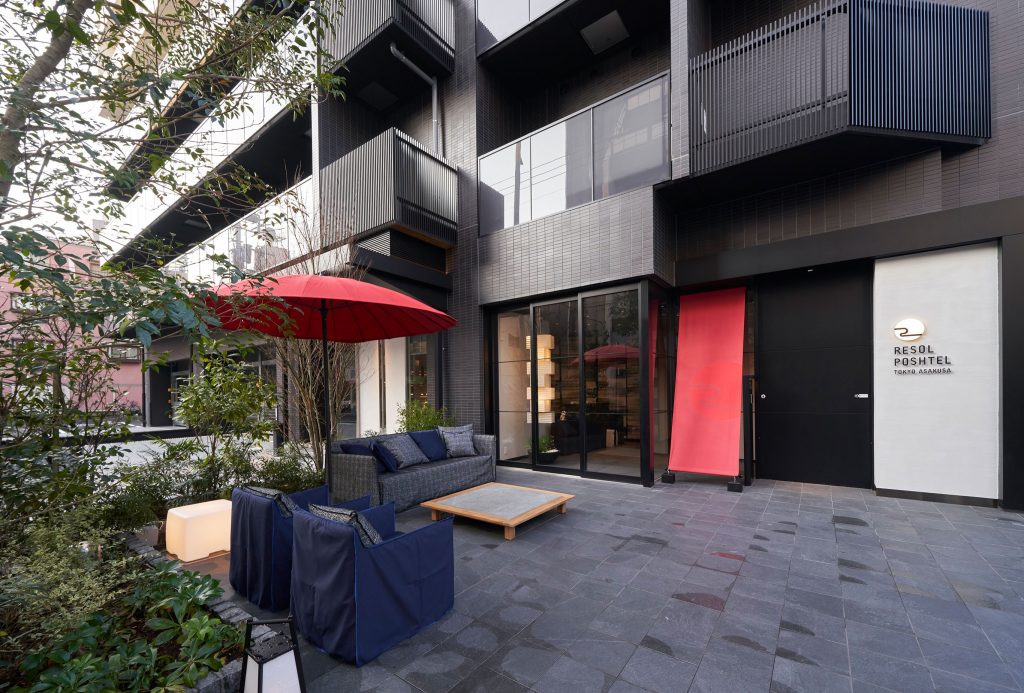
Asakusa
Resol Poshtel Tokyo Asakusa
Address: S2 Chome-25-1 Nishiasakusa, Taito City, Tokyo 111-0035, Japan
A stylish poshtel combining boutique hotel comfort with the affordability and social atmosphere of a hostel.
Cleanliness and Noise: The Make-or-Break Factors in a Hostel
If you’ve stayed in a bad hostel, you know exactly what the problems are. A bathroom that someone else left in an unacceptable state at 2am. A dorm-mate who comes in drunk at 3am with a torch on their phone. Light from the corridor seeping through a curtain that doesn’t close properly. These are the experiences that put people off hostel stays for years.
Resol Poshtel Tokyo Asakusa addresses all three — and the data backs it up.
Cleanliness
The property scores 9.7–9.8 on cleanliness across major review platforms. That’s among the highest scores for any hostel-category property in Tokyo. Fifty-five reviews specifically tag ‘Clean bathrooms’ as a highlight — which means guests are not just not complaining, they’re actively praising the standard. Shared bathrooms are gender-split and, according to multiple reports, cleaned multiple times per day.
This isn’t just about the bathrooms. The dorm rooms themselves, the common areas, and the lounge are all maintained to a standard that guest after guest describes as ‘hotel-like.’ Housekeeping reportedly runs every few hours during the day.
Noise and Sleep Quality
The pod design is the key variable here. Full blackout curtains around each bunk mean that a guest returning late doesn’t flood the room with light. The semi-enclosed structure also creates a sound buffer — not perfect soundproofing, but meaningfully better than an open bunk in a room with six strangers.
Guest reports are consistent on this: even in rooms with 12 beds, noise levels were minimal and fellow guests were considerate. Part of this is the design, and part of it is the type of traveller the property attracts — a poshtel at $40–70/night draws a different crowd than a party hostel at $15/night.
The honest caveat: if you’re an extremely light sleeper, no hostel design eliminates all noise. But Resol Poshtel Tokyo Asakusa does more than most to mitigate it.
Location: Is Resol Poshtel Asakusa’s Best-Positioned Budget Stay?
Location is where Resol Poshtel Tokyo Asakusa makes its strongest argument. And the argument is compelling.
Sensoji Temple
The property sits 0.18 km from Sensoji Temple — Tokyo’s most visited temple and the centrepiece of the Asakusa neighbourhood. That’s roughly a 2–7 minute walk depending on your pace and which entrance you approach from. You can roll out of bed, grab a free coffee, and be standing in front of the Kaminarimon gate in the time it takes to find a taxi in some parts of Tokyo. For travellers whose itinerary is Asakusa-focused — and there’s a strong case for making it so — this is an almost unbeatable position.
Nakamise Shopping Street, the covered arcade leading to the temple, is equally accessible. Asakusa Rockza, the historic theatre, is a short walk away.
Transport Links
Tawaramachi Station on the Tokyo Metro Ginza Line is approximately 5 minutes on foot. Asakusa Station — served by the Ginza Line, Tobu Skytree Line, and Asakusa Line — is around 10 minutes. From Asakusa, Ueno is one stop (roughly 3 minutes, approximately $1 fare on the Ginza Line). Ueno connects you to the JR Yamanote Line, which means Shinjuku, Shibuya, Harajuku, and Akihabara are all within reasonable reach.
Getting Here from Narita and Haneda Airport
For UK travellers landing at Narita or Haneda after a long-haul flight, knowing your route to the property before you land makes the whole arrival easier. Here’s how each journey works.
From Narita Airport:
- Take the Keisei Skyliner from Narita Airport to Ueno Station — approximately 41 minutes,
¥2,570 (£13 at current rates). This is the fastest and most straightforward option; buy tickets at the airport before boarding. - At Ueno, transfer to the Tokyo Metro Ginza Line (one stop toward Asakusa) — approximately 3 minutes,
¥180 (£0.90). - Exit at Tawaramachi Station and walk approximately 10 minutes to the property.
Total from Narita: approximately 55–60 minutes, ¥2,750 (£14) all in.
From Haneda Airport:
- Take the Keikyu Airport Line direct toward Asakusa — approximately 40 minutes,
¥630 (£3.20). No transfers required on some services; check the destination board for Asakusa-bound trains. - Alight at Asakusa Station and walk approximately 10 minutes to the property.
Total from Haneda: approximately 50 minutes, ¥630 (£3.20) all in.
IC Cards (Suica/Pasmo): Both routes are payable with an IC card — either a Suica (available from JR machines) or a Pasmo (available from Tokyo Metro machines). Loading one at the airport saves you buying individual tickets at every station and works on virtually all trains and buses in Tokyo. It’s the single most practical thing you can do on arrival.
Shopping and Essentials
Uniqlo, MUJI, and a drugstore are directly across the road from the property. This is not a trivial detail — if you’ve forgotten a travel adapter, run out of sunscreen, or want a cheap pair of socks, you don’t need to plan a shopping trip. Don Quijote (the famous Japanese discount retailer) is within a 3-minute walk. For almost anything else, the Asakusa shopping streets cover it.
The Honest Limitation at Resol Poshtel Tokyo Asakusa
Asakusa is excellent for sightseeing but it leans east — Shinjuku and Shibuya are on the opposite side of central Tokyo. If your itinerary is heavily weighted toward those western neighbourhoods, you’ll spend more time on the metro than you would staying closer to them. It’s manageable, but worth knowing. The honest answer is that Asakusa makes a better base if you’re prioritising the temple district, Ueno, Akihabara, and the Skytree area — not if you’re spending most of your time in Harajuku or Shibuya.
Who Is Resol Poshtel Tokyo Asakusa Best For?
Not every great property is right for every traveller. Here’s an honest assessment of who will get the most from this stay — and who probably won’t.
Solo Travellers
This is the primary audience, and the property is clearly designed with solo travellers in mind. The pod privacy means you’re not sharing a sleeping surface with a stranger. The social lounge gives you a space to meet people if you want to. The staff can help you navigate the city. The price point is accessible on a solo budget. It checks every box.
Budget-Conscious Couples
A private room from $71/night in central Asakusa is a genuinely good deal for two people. You’re splitting the cost of a private room in one of Tokyo’s most sightseeing-rich neighbourhoods. It’s not a romantic boutique hotel — but it’s not trying to be. If you want character, location, and privacy without paying ¥30,000+ per night at a mid-range business hotel, this works well.
First-Time Hostel-Goers
The hotel-grade service removes the intimidation factor that puts many travellers off their first hostel experience. There’s a real front desk with real staff. The bathrooms are immaculate. The pods don’t feel like camping. If you’ve always stayed in hotels but want to try a more social, budget-friendly approach, this is about as gentle an introduction as you’ll find.
Asakusa-Focused Itineraries
If your Tokyo plans centre on Sensoji, Nakamise, the Skytree area, Ueno, and Akihabara, the location is close to ideal. You’ll walk to most things and take a short metro ride to the rest.
Who Should Look Elsewhere
If you want a lively party hostel with a bar and nightly social events, this isn’t it. If you’re travelling in a large group needing a multi-bed room, the configuration may not suit. And if Shinjuku or Shibuya is your primary base, staying in Asakusa means a 30–40 minute metro journey each way — which adds up.
Asakusa
Resol Poshtel Tokyo Asakusa
Address: S2 Chome-25-1 Nishiasakusa, Taito City, Tokyo 111-0035, Japan
A stylish poshtel combining boutique hotel comfort with the affordability and social atmosphere of a hostel.